In the past two days I have taken a close interest in the views of those I follow via various social media channels in respect of fixing in cricket. Many, whilst saddened, believe that recent revelations are a step forward - a clear opportunity to begin to purge our once great game of those who use it as their personal play thing, a sporting stock exchange rife with insider trading.
Showing posts with label ICC. Show all posts
Showing posts with label ICC. Show all posts
Saturday, May 17, 2014

Tuesday, October 9, 2012
Gayle. Gangnam. Glory.
 |
| (Courtesy of thesun.co.uk) |
Chris Gayle’s mighty slab of willow may have been silenced on Sunday but he had wielded it like a Viking for three weeks. His impact on a buoyant Windies outfit was undeniable. The Calypso cricketers played the game we love like a sporting party – and they won! On sub-continent decks where one of the local sides looked set to take home the gong, a burgeoning Windies side extinguished their flame.
Thursday, October 4, 2012
(Super) Over and out
 |
| Southee says it all...(Courtesy of stuff.co.nz) |
Has the New Zealand side failed to live up to expectations? Unquestionably, but does that say more about the inflated views we have of our national side than the shortcomings in their performance? Ranked sixth in the T20 ICC rankings when leaving the Caribbean, New Zealand ended the tournament having slipped to eighth – on this occasion the numbers don’t lie. One win in five is a poor return – victory against a hapless Bangladesh will satisfy no-one.
Tuesday, September 25, 2012
The T20 debate: Every cloud has a silver lining
If you haven't already, have a read of the affirmative side of the debate – Blame T20, for everything?! – there are two sides to every argument.
Negative – everything in moderation:
As it was pointed out by the affirmative, T20 is having an effect on international cricket – but is it necessarily a negative one? If its evils were so divisive and detrimental to our great game wouldn’t cricket’s shortest format have died out before it even got started? It hasn’t, and that in itself holds the key – the simple principles of supply and demand mean the format is flourishing.
At its base, sport is about competition and entertainment. Competition drives players, entertainment attracts fans. In a modern world where entertainment choices are greater than ever before, has T20 filled a void that was missing in our great game? For the most staid of traditionalists T20 may offer very little – it’s seen as the antithesis of what they believe cricket is, if only because of a closed mind. But for those on the fringes, cricket is seen in a light that’s never shone on an outfield before.
Negative – everything in moderation:
As it was pointed out by the affirmative, T20 is having an effect on international cricket – but is it necessarily a negative one? If its evils were so divisive and detrimental to our great game wouldn’t cricket’s shortest format have died out before it even got started? It hasn’t, and that in itself holds the key – the simple principles of supply and demand mean the format is flourishing.
At its base, sport is about competition and entertainment. Competition drives players, entertainment attracts fans. In a modern world where entertainment choices are greater than ever before, has T20 filled a void that was missing in our great game? For the most staid of traditionalists T20 may offer very little – it’s seen as the antithesis of what they believe cricket is, if only because of a closed mind. But for those on the fringes, cricket is seen in a light that’s never shone on an outfield before.
Thursday, July 19, 2012
When the Calypso Kings ruled Babylon
 |
| The fast and the furious (courtesy of ESPNcricnfo) |
It may seem unusual that I have chosen to reflect on such an ill-fated series, but the conduct on the field is only a small part of the significance of that series. It was more about what those three tests started than what happened on the field of play. For the Windies it was their last series defeat in 15 years – the beginning of the Fire in Babylon era. While there was no Spark in Wellington to follow for the Kiwis, their first test series victory in New Zealand would see them embark on a 12 year unbeaten series run at home.
Wednesday, June 27, 2012
Coming to America - Home of the Brave?
 |
| International cricket in Florida (Courtesy of the ICC) |
Friday, June 22, 2012
The prodigal son returns
Twenty20 is a format Dan enjoys and the opportunity to be part of a team which competes at a world event is enticing for him. He has been encouraged by his team-mates, coaching staff and others at NZC. And we are thrilled to have him in the mix. He will offer a lot to the side.
National Selection Manager Kim Littlejohn on the return of Daniel Vettori

In a month when Kevin Pietersen announced his retirement from all limited overs international cricket, Daniel Vettori’s decision to come out of retirement and make himself available for New Zealand selection for the World Cup T20 tournament in Sri Lanka, whilst showing his worth to his side, illustrates the difference in riches between cricket’s glitterati and the second tier nations.
National Selection Manager Kim Littlejohn on the return of Daniel Vettori

In a month when Kevin Pietersen announced his retirement from all limited overs international cricket, Daniel Vettori’s decision to come out of retirement and make himself available for New Zealand selection for the World Cup T20 tournament in Sri Lanka, whilst showing his worth to his side, illustrates the difference in riches between cricket’s glitterati and the second tier nations.
Saturday, May 26, 2012
New Zealand's Wisden Cricketers of the Year – who’s next?
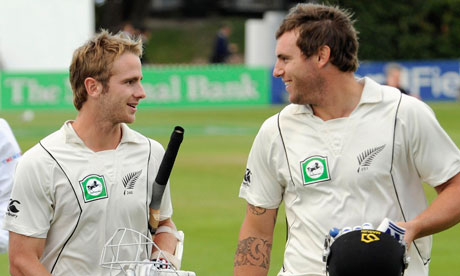 |
| Kane Williamson and Doug Bracewell - Wisden Cricketers of the Year in waiting? |
For a country similar in size to Sydney, Australia (or the counties of Kent, Essex and Hampshire), New Zealand has produced some exceptional cricketing talent who have left an indelible mark on our great game. A dozen of them have received the game’s ultimate accolade, being named one of Wisden’s Five Cricketers of the Year.
Friday, May 25, 2012
New Zealand's Wisden Cricketers of the Year - winning is a habit
 |
| A Crowe cover-drive: poetry |
Thursday, February 23, 2012
Fans - critic or assassin?
"When we judge or criticise another person, it says nothing about that person; it merely says something about our own need to be critical" - Unknown
Why is it that so many fans feel the need to be critical, bordering on the vitriolic? That's not to confuse constructive comment or well-reasoned and supported argument - more the conveyance of ownership and the personal attacks, not of sporting ability but character and personality. Are we so baseless that we take delight in the derision of our sporting 'heroes'?
The deciding New Zealand versus South Africa T20 brought such comment to the fore - the Black Caps capitulated as their African opponents have done at ICC tournaments in the past. For once, the clichéd choke is not too strong a word. With five overs to go New Zealand needed less than a run a ball with seven wickets in hand, and on a ground that only just accommodates a full sized rugby pitch, yet in the ensuing 24 hours comment centred solely on Jesse Ryder.
Ryder's an easy target. He has just returned from another injury layoff, enjoys a pint or 20 and thinks a steak and cheese pie is a well-balanced meal - but the man can wield the willow. He hit 52 at close to 125 and top scored for the match after not donning the black kit for the first time since New Zealand upset Australia in Hobart last December. Without question he made errors, big ones, but if you believe much of what has been written and preached he was the only Kiwi on the pitch. The condemnation has been direct, swift and condescending.
Little has been made of the soft dismissals of the other top order batsmen or the inability of capable middle order players to even lay bat on ball - scribes and punters lay the blame squarely at Ryder's feet. Yes, he fumbled his way through his last few runs but he has no track record of putting personal milestones above team outcomes - Twitter and talkback radio would tell you otherwise. Much of the comment was baseless at best; personal abuse at gutter level. But, the sentiment that struck me was from a former player, himself the target on too many occasions during a career that never quite reached the pinnacle of its true potential.
Craig McMillan, former Black Cap turned television commentator and radio pundit, was unerring in his criticism of Ryder and his pursuit of personal glory, whilst largely neglecting the mishaps of others. He's a paid 'expert' asked to give his considered opinion - no issues there. But, and it's one of JLo proportions, the crucifixion of Ryder is coming from a man who himself was widely criticised for his girth, his fitness and his propensity to throw it away in a blaze of glory. The same man who, when people questioned his form in test cricket near the sunset of his career, answered in the best way - with a test century but then commented that his innings should gag a few commentators - how quickly we forget about the glasshouses in which we all live.....
Whilst Ryder is so frequently the target of condescension and personal attacks, there are many others scattered throughout our great game. Brash South African, sorry - Englishman, Kevin Pietersen, Australian captain Michael Clarke and Brendon McCullum all suffer the same fate. Outspoken New Zealand wicketkeeper Adam Parore and the aforementioned McMillan were never far from the airwaves and column inches in their day either. But why is it that certain players draw unparalleled criticism whilst others seemingly walk on water, even when they have muddied them so frequently?
Why do 'fans' continually partake in the character assassination and unsupported criticism of our sporting 'heroes'? Is it our right? In the end are players, coaches, managers and teams accountable to the paying public? As we invest more heavily in inflated ticket prices, merchandise, sponsors' products and pay television, maybe they are - though that's for another day. Constructive comment and considered opinion are fair but why must we cross the boundary into personal attacks and vitriol - is it seen in any other endeavour (politics excepted)? Is it envy, jealousy or the unparalleled riches that players earn while the 'common man' (and fan) puts his nose to the grindstone in a 'real' job? It's an open question - I have no definitive answer....
Scribes and casual bloggers do it too; it's not just the domain of the man on the street. Unfortunately, emotion sells - would anyone buy a newspaper that leads with 'We lose - no one's to blame'? In a few short months of writing this blog I've realised it's easier to criticise on personal feelings than compose a considered argument.
In today’s digital, social media-obsessed world there are now endless avenues open for comment – the issue is that most are anonymous, so balanced debate is often lacking. Most fans love to comment on the stars of their sport, especially in Aotearoa where most are easily accessible to the public. Twitter, Facebook, talkback radio (with SMS comment – I still don’t get it), blogs, forums and article comments, among others, all provide an endless source of unmitigated banter. But, here is the kicker – on most occasions, in New Zealand at least, when our side wins talkback, and most others, is often slow; when we lose to France at a RWC or are farcical in our efforts at the wicket, every couch critic wants his two cents and his pound of flesh – no matter the lack of logic in the argument, heated as it often is.
Most of us will never play at the highest level, or commentate or write about our great game to audiences too innumerable to count – more the pity. Why then do we confuse personal sporting performance with criticisms of personality - seldom do the two meet? Very few of us have insights into the players; their work ethic, attitude and personality. Our view is largely from the outside, yet fan comment often bases thoughts on what we see and our perceptions; not fact or reasoned opinion - a little context goes a long way.
Many of us have love-hate relationships with our cricketing personalities – others simply love to hate them. Whatever your opinion, most fans are just that – they love their teams and want nothing more but for them to do well – sorry, WIN! The paradox is that a minority have a confused way of showing it.
For all his faults in the decider, Ryder did not lose New Zealand the game – maybe South Africa should even get a little credit. Will the same punters who offered little more than baseless abuse jump back on the bandwagon if Ryder flays the South African quicks in the test series? Ryder appeared to have lost a little weight in his injury absence yet people still made comment about his running – did punters say the same things of the beer swilling Tasmanian, David Boon? No, the portly Boon still holds legend status for his Ashes tour drinking antics – he’s seen as the quintessential Aussie bloke.
Don’t get me wrong, I have little time for cheerleading either - Channel 9 are cringe worthy to all but a select groups of Aussie sycophants. Likewise, no-one wants to hear the Super Rugby player political correctness or the ‘netball was the winner on the day’ speech – as fans it’s about having an opinion, not a baseless rant.
If you think my ramblings are off the mark, I'm open to both destructive criticism and vitriol. Post a comment or hunt me down on Twitter (@aotearoaxi) - I don't live in the public eye, I prefer the anonymity of a faceless moniker. Let’s hope that irony is not lost…
This post also appears in the April edition of SPIN-off Cricket.
 |
| Jesse Ryder in full flow |
The deciding New Zealand versus South Africa T20 brought such comment to the fore - the Black Caps capitulated as their African opponents have done at ICC tournaments in the past. For once, the clichéd choke is not too strong a word. With five overs to go New Zealand needed less than a run a ball with seven wickets in hand, and on a ground that only just accommodates a full sized rugby pitch, yet in the ensuing 24 hours comment centred solely on Jesse Ryder.
Ryder's an easy target. He has just returned from another injury layoff, enjoys a pint or 20 and thinks a steak and cheese pie is a well-balanced meal - but the man can wield the willow. He hit 52 at close to 125 and top scored for the match after not donning the black kit for the first time since New Zealand upset Australia in Hobart last December. Without question he made errors, big ones, but if you believe much of what has been written and preached he was the only Kiwi on the pitch. The condemnation has been direct, swift and condescending.
Little has been made of the soft dismissals of the other top order batsmen or the inability of capable middle order players to even lay bat on ball - scribes and punters lay the blame squarely at Ryder's feet. Yes, he fumbled his way through his last few runs but he has no track record of putting personal milestones above team outcomes - Twitter and talkback radio would tell you otherwise. Much of the comment was baseless at best; personal abuse at gutter level. But, the sentiment that struck me was from a former player, himself the target on too many occasions during a career that never quite reached the pinnacle of its true potential.
Craig McMillan, former Black Cap turned television commentator and radio pundit, was unerring in his criticism of Ryder and his pursuit of personal glory, whilst largely neglecting the mishaps of others. He's a paid 'expert' asked to give his considered opinion - no issues there. But, and it's one of JLo proportions, the crucifixion of Ryder is coming from a man who himself was widely criticised for his girth, his fitness and his propensity to throw it away in a blaze of glory. The same man who, when people questioned his form in test cricket near the sunset of his career, answered in the best way - with a test century but then commented that his innings should gag a few commentators - how quickly we forget about the glasshouses in which we all live.....
Whilst Ryder is so frequently the target of condescension and personal attacks, there are many others scattered throughout our great game. Brash South African, sorry - Englishman, Kevin Pietersen, Australian captain Michael Clarke and Brendon McCullum all suffer the same fate. Outspoken New Zealand wicketkeeper Adam Parore and the aforementioned McMillan were never far from the airwaves and column inches in their day either. But why is it that certain players draw unparalleled criticism whilst others seemingly walk on water, even when they have muddied them so frequently?
Why do 'fans' continually partake in the character assassination and unsupported criticism of our sporting 'heroes'? Is it our right? In the end are players, coaches, managers and teams accountable to the paying public? As we invest more heavily in inflated ticket prices, merchandise, sponsors' products and pay television, maybe they are - though that's for another day. Constructive comment and considered opinion are fair but why must we cross the boundary into personal attacks and vitriol - is it seen in any other endeavour (politics excepted)? Is it envy, jealousy or the unparalleled riches that players earn while the 'common man' (and fan) puts his nose to the grindstone in a 'real' job? It's an open question - I have no definitive answer....
Scribes and casual bloggers do it too; it's not just the domain of the man on the street. Unfortunately, emotion sells - would anyone buy a newspaper that leads with 'We lose - no one's to blame'? In a few short months of writing this blog I've realised it's easier to criticise on personal feelings than compose a considered argument.
In today’s digital, social media-obsessed world there are now endless avenues open for comment – the issue is that most are anonymous, so balanced debate is often lacking. Most fans love to comment on the stars of their sport, especially in Aotearoa where most are easily accessible to the public. Twitter, Facebook, talkback radio (with SMS comment – I still don’t get it), blogs, forums and article comments, among others, all provide an endless source of unmitigated banter. But, here is the kicker – on most occasions, in New Zealand at least, when our side wins talkback, and most others, is often slow; when we lose to France at a RWC or are farcical in our efforts at the wicket, every couch critic wants his two cents and his pound of flesh – no matter the lack of logic in the argument, heated as it often is.
Most of us will never play at the highest level, or commentate or write about our great game to audiences too innumerable to count – more the pity. Why then do we confuse personal sporting performance with criticisms of personality - seldom do the two meet? Very few of us have insights into the players; their work ethic, attitude and personality. Our view is largely from the outside, yet fan comment often bases thoughts on what we see and our perceptions; not fact or reasoned opinion - a little context goes a long way.
Many of us have love-hate relationships with our cricketing personalities – others simply love to hate them. Whatever your opinion, most fans are just that – they love their teams and want nothing more but for them to do well – sorry, WIN! The paradox is that a minority have a confused way of showing it.
For all his faults in the decider, Ryder did not lose New Zealand the game – maybe South Africa should even get a little credit. Will the same punters who offered little more than baseless abuse jump back on the bandwagon if Ryder flays the South African quicks in the test series? Ryder appeared to have lost a little weight in his injury absence yet people still made comment about his running – did punters say the same things of the beer swilling Tasmanian, David Boon? No, the portly Boon still holds legend status for his Ashes tour drinking antics – he’s seen as the quintessential Aussie bloke.
Don’t get me wrong, I have little time for cheerleading either - Channel 9 are cringe worthy to all but a select groups of Aussie sycophants. Likewise, no-one wants to hear the Super Rugby player political correctness or the ‘netball was the winner on the day’ speech – as fans it’s about having an opinion, not a baseless rant.
If you think my ramblings are off the mark, I'm open to both destructive criticism and vitriol. Post a comment or hunt me down on Twitter (@aotearoaxi) - I don't live in the public eye, I prefer the anonymity of a faceless moniker. Let’s hope that irony is not lost…
This post also appears in the April edition of SPIN-off Cricket.
Wednesday, February 15, 2012
Ka kite Zimbabwe. Kia ora South Africa
 |
| New Zealand and South African hostilities are set to resume |
The conclusion to Zimbabwe’s tour was notable for two things. For the first time in a month long tour New Zealand were put under pressure, and Hamilton dominated in Hamilton. Zimbabwean opener Hamilton Masakadza deposited the New Zealand bowlers to all parts of Hamilton’s Seddon Park to score the quickest T20 half-century in Zimbabwean cricketing history; a feat then run close by Brendan Taylor who showed his unequalled batting prowess amongst his national peers. Unfortunately, the result though closer, petered out to the same conclusions as the other lopsided contests.
What we all hoped would at least be a series of fair contests ended up as little more than repetitive opposed open wicket sessions for the New Zealanders. Whilst the contests improved as their length shortened, New Zealand was rarely challenged at any stage other than in the final T20 hit and giggle.
The major concern from New Zealand’s perspective was that with a little pressure applied in the final encounter, they tended to revert to type. After looking untroubled in five previous matches, the fielding effort in their final outing saw bowlers regularly missing their lengths and some of the fielding intensity fell away with it. Against weaker opposition such cracks can be papered over without affecting the result – similar mistakes against South Africa will be punished with ruthless efficiency.
In the final wrap-up, New Zealand have done what Kiwi fans have asked of them and dominated weaker opposition, where in the past they have been prone to lowering their standards. There will be knockers, there always are, but for want of a cliché, they can only play what’s in front of them.
New Zealand has achieved what they needed from the Zimbabwe series, with most players achieving. The conjecture over BJ Watling’s place in the test side as the first choice wicketkeeper subsided after a maiden test century and a polished performance behind the stumps. The question is whether he can continue to grow into the role during a three test series as opposed to a three day landslide? Brendon McCullum confirmed he can build an innings and Chris Martin reminded everyone he’s not yet past it with a host of test wickets – he will need to repeat the performance against South Africa for New Zealand to expose the middle order early on sporting pitches.
The six Kiwi debutants have all got a feel for international cricket, albeit in the limited overs format. Tarun Nethula had the commentators sounding like Channel 9 cheerleaders but given it’s over a decade since we fielded an international leg spinner and as far back as Jack Alabaster since one could regularly pitch it, that’s understandable. Roneel Hira looked composed against the Zimbabwe top order but his control will be tested against Amla, de Villiers and their peers. The youngest of the debutants, Tom Latham, looks like the best long term option across all formats. Whether he gets to wield the willow in the South African ODIs may depend on whether Taylor and/or Ryder return.
For the past month, Martin Guptill has shown he has started to learn the harsh lessons of international cricket. Disappointed at a weak dismissal after building a solid platform in the test, Guptill has gone from strength to strength throughout the remainder of the series. His ability to do it all with a straight bat and strong running has been the most pleasing aspect of a largely lifeless series.
Zimbabwe was at best sporadic in their efforts and at times looked like they would struggle at domestic level. Brendan Taylor has shown glimpses of his potential to make a true mark on the international scene but he appears to bat with the weight of a nation on his shoulders - which is largely how it is. A stint in county cricket would help him move his game forward but the key is to develop those around him. Taibu continues to get starts but struggles to dominate an innings and Waller showed little of his potential. Hamilton Masakadza and Elton Chigumbura have shown ability in the shorter forms but to succeed long term they need to translate limited overs cameos into test match contributions. That will only be achieved through more time at the crease outside of their homeland.
The elder statesman, Ray Price, showed the mettle and competitive spirit we all expect from Zimbabwe, but it is one of the team’s youngsters who offers the most promise. 22 year old Kyle Jarvis needs an extra yard of pace but was wholehearted in his efforts in every spell. If he continues to develop he has the potential to lead a young attack over the next decade. Like Taylor, he would benefit from time in England or in grade cricket in Australia where he could build his pace and hone the harsh edge needed to succeed as a quick at the highest level.
In the short term Zimbabwe would do well to get their fielding to a standard above that of club level. In the U19 coach, New Zealander Chris Harris, they have one of the best fielding exponents in the game and need to get him involved at senior level. Batting and bowling take time for skills to grow but fielding is largely about hard work and attitude, and Zimbabwe need to take every chance on offer – New Zealand has learned that the hard way in past seasons.
World cricket wants to see a competitive Zimbabwean side - the more competition across nations the better for the continued development of our great game. Zimbabwe have shown they can produce talent, as they did in their glory days with Streak, the Flower brothers, Brandes, Campbell et al., and cricket’s most recognisable flat track bully, Graeme Hick.
Given their prolonged absence from the international game, time is needed – India, New Zealand, Sri Lanka and Bangladesh all went through the same trials in their emerging years. The ICC and their international members need to be patient and all take an interest in making the whole strong as opposed to just their own backyard. Established nations should encourage Zimbabwe to tour, even if on short tours largely against domestic sides with a test and some limited overs matches thrown in. Likewise, why not use the African nation as a testing ground for emerging players and A team tours as often happened in the 1980s and 1990s when Zimbabwe were building as they are now?
Zimbabwe’s cricketing powerbrokers need to work to get their players experience in foreign conditions, most likely in domestic competitions when they’re not touring. The ability to play in varied conditions and the experience gained in other competitions will help grow the Zimbabwean game.
This summer’s main course is now in New Zealand and will provide a litmus test of New Zealand’s growth post-Hobart. South Africa is a world class unit and will punish New Zealand if they drop their standards even slightly. The coming weeks are crucial for the development of Bracewell and Williamson, who need to solidify the potential they have shown, but New Zealand’s fortunes hang on their established stars taking the lead and showing the others they can compete. If the New Zealanders can get across the line in the ODIs and salvage a drawn test series their summer would end on a well-deserved high, though given the South Africans will claim the number one test spot if they whitewash the Kiwis, they are unlikely to ease up at any stage.
Finally, the South Africans are to be congratulated for opening their tour in Christchurch. The city has been decimated by a spate of earthquakes and a T20 match against the locals will be their first taste of international sport in a long time. Kia kaha, Christchurch and thank you, South Africa.
Saturday, January 28, 2012
Run fat boy run!
 |
| Taylor limps off retired hurt |
As a New Zealand cricket supporter, that should be music to your ears, but for Ross Taylor who was walking off lame. Forced to retire hurt with a torn calf, Taylor will miss the rest of the Zimbabwe tour, if not the early stages of South Africa’s visit to our shores. It was also the first time, in New Zealand at least, that the error of the ICC’s decision to implement the no-runner rule came into focus, though in this instance it is unlikely to have a large effect on the final result.
In essence, no, in actuality, the changes to the runner rule mean that at international level at least, an injured batsman is forced to either hit out or limp off - no runner is allowed so his wicket is lost. In Taylor’s case, he would likely have left the field anyway, but what if he had simply strained his calf as opposed to tearing it? What if Taylor had been on 22 instead of 122, and New Zealand were four or five down for under 100? Would the same indifference to the new rule have been shown then?
Prior to the introduction of the no-runner rule late last year, an injured batsman could call for a runner and continue his innings albeit that the opposing captain had to agree; generally that was little more than a formality. The ICC thought it was being manipulated and abused so changed the rule, yet the same power brokers previously implemented the 15 degree rule so now you have to throw a baseball pitch to be called for chucking! Double standards? An off spinners most deadly delivery is now the one that is delivered with a bent arm and goes the other way – has that not been abused as well?
 |
| A case for pinch runners? |
The ICC’s decision was forced on them by a captain finally denying a batsman a runner. If such leadership had been shown more regularly, would those stretching the rules have tried so often? Many of the issues were caused by ill-prepared players getting cramps and asserting they needing running help – Andrew Strauss put an end to that. He refused South Africa’s Graeme Smith, already having scored 100, a runner for cramp in the 2009 Champions Trophy, and more power to him. But as an isolated incident, his decision no doubt forced the ICC’s hand. Would it have caused the same change in the corridors of the ICC if Shakib Al Hasan had refused Brendan Taylor the same opportunity?
Cricket pundits the world over have varied views on the new rule – bowlers generally approve, batsmen not so much. Given how much the game has swayed in the batsmen’s’ favour in the past two decades that’s understandable. Jesse Ryder is not a fan. Given the comments of both John Wright and Ross Taylor his path back to international cricket could be a long one – no side can afford to carry an injury prone batsman anymore. But, does the no-runner rule unfairly disadvantage the batting side? Yes. If Taylor was in the early stages of his innings when the injury occurred and was unable to run, New Zealand have effectively lost his wicket. It also robs the paying public of entertainment; if injured players don’t retire hurt they can often do little else but stand and swing –I can turn on ESPN and watch the MLB if that was what I wanted from sport.
And to address the protestations of the bowling fraternity, no you don’t get a replacement, but in the modern game how many in the stands come to watch you? Bowlers with the genius of Warne, Marshall, Akram and Ambrose have largely disappeared from the game – none but a small minority would bring me, or other spectators, through the gates.
Players will always find loopholes in crickets laws, it's human nature – the 15 degree bowling law illustrates that, but should we penalise those who are legitimately injured? Should we force an injured batsman to retire and his side effectively lose a wicket? If he stays it's hardly a great watch when all he can do is try to bludgeon boundaries without any thought of running (much like T20, which given its current success might be what authorities want!) – that’s not what I want to see at test level. And if none of that resonates with you, surely the mayhem and confusion that ensued when runners were in the middle made the game a more interesting spectacle – comedy on the sporting stage?
Saturday, January 7, 2012
Every colour but white
How do you prepare an underperforming international cricket team for an upcoming test series? If you're New Zealand Cricket, the answer seems to lie with T20 (with a handful of ODIs thrown in for good measure).
As opposed to donning the whites and throwing themselves headlong into first class cricket to prepare for a one-off test (one test does not a series make, but that's a topic for another day) against Zimbabwe and a three test series against the might of South Africa, Taylor, McCullum, Bracewell et al. will see nothing but a rainbow of cricketing uniforms, white balls, Dilshan scoops and change-ups. Those with intentions of breaking into the squad for the Zimbabwe test will have to do so via a weight of runs and wickets in the shorter forms and hope the selectors are willing to take the gamble they’ll make the step up. Whatever happened to preparing for test cricket, still the pinnacle of our game, on a diet of first class cricket where the only colours on offer are a sporting green wicket, a shiny red ball and the pink tinge of sunburn on the neck of a lone spectator?
The domestic cricket calendar suggests New Zealand Cricket don’t share my views – it seems numbers (read: money) have got out of balance with the common sense cricket management. So, let’s play the numbers game:
During the middle third of the New Zealand summer, half of the test side that subdued Australia in Hobart will play no first class cricket. Those who play all three international formats will spend that period immersed in T20 and 50-over cricket, both on the domestic and international fronts; some will even pull up stumps and travel to Australia in between domestic rounds to play in Australia’s Big Bash League. Ross Taylor, Brendon McCullum, Martin Guptill, Dean Brownlie and possibly Kane Williamson will have little or no chance to spend long periods at the crease before battling a South African side that continues to unearth fast bowling talents like the All Blacks breed openside flankers. If Jesse Ryder gets over a calf strain in time for the Zimbabwean test in late January, he will have had no time in the middle but will then likely play all the short form international matches prior to the first test against South Africa. That would leave the top six with no first class cricket leading into a series where they’re asked to blunt the bowling of Dale Steyn and Morne Morkel, ranked numbers one and five in the world respectively; a formidable attack even before mentioning Philander or de Lange. Of the bowlers, Doug Bracewell likely be the only one in the same boat – a huge ask for a young tyro still learning the intricacies of his art.
It’s not much easier for those on the fringes who are looking to break into the test side. Given they won’t have played first class cricket for the 54 days leading up to the one-off Zimbabwe test, it’s a big ask to pick them in a test match – fingers crossed Jesse’s yoga and pilates schedule leads to results. Sorry, if their province doesn’t make the HRV Cup (domestic T20) final, they may get a chance in a three-day match against the Zimbabweans that finishes two days before the test. At least the hopefuls will get the opportunity to play in two Plunket Shield matches before the South African test series though they will likely need phenomenal figures to break into the squad. The test specialists; Daniel Vettori, Chris Martin and Reece Young (plus possibly Trent Boult) will have the same opportunities and will need every day they can to hone their skills in anticipation of a fierce battle.
There are a number of issues that have led to the current flood of domestic T20 matches and the continued expansion of the HRV Cup, but will it help New Zealand Cricket be more competitive on the international scene, especially at test level? In short; no, and that creates a conundrum for those involved with the New Zealand game. Currently, we tend to get the requisite fillip of T20I and ODI matches but we get little more than a two test series against the bigger nations away from home. Whilst test and first class cricket is the game’s pinnacle, it doesn’t pay the bills, unless you’re England where it’s rare if the ‘full house’ signs aren’t up for at least the first four days of any test match. New Zealand is a very small market and the big sponsorship dollars are with rugby, so money has to be found elsewhere – at the moment, that’s T20. And let’s be honest, it brings punters to the game who wouldn’t otherwise give cricket a second glance, and that’s a good thing – many of the PlayStation generation don’t have the attention span to watch a one-dayer, let alone even one day of test cricket!
Both the provinces and New Zealand Cricket rely on money from gates and television revenues from T20 to help develop the game at grass roots level, promote it to an audience with a lot more entertainment choices than at any time before, and pay the salaries of those who play the game at the upper echelons. So, they play it through the holiday season to maximise exposure and revenues; they should, that’s what they’re tasked with doing. But, and it’s a but of Sir Mix-A-Lot proportions, should first class cricket be put on the back burner for eleven weeks? Surely domestic 50 over cricket can be fitted in where a gap exists, or be played the day after a Plunket Shield match, which would help cut expenditure as well? That would allow the HRV Cup to keep its current format and dates, and be played entirely between mid-December and mid-January when we are all enjoying time away from work, relaxing in the sun. Then, instead of playing poorly attended domestic 50 over matches in the Ford Trophy, players could get back into first class cricket earlier than they will in the 2011/12 season – a win-win for everyone! Well, for me at least, though I don’t imagine Justin Vaughan (or David White) will be inviting me to join them any time soon.
Spare a thought for the players too. They get publicly slated when they fail, even more so when they play a loose shot or make a decision akin to a brain fart, yet they are put in a position where they get nothing but limited overs cricket in preparation for a test series. They have to change what they do in a physical sense solely by mental application – how many sprinters run a marathon simply by changing their mental outlook?
As opposed to donning the whites and throwing themselves headlong into first class cricket to prepare for a one-off test (one test does not a series make, but that's a topic for another day) against Zimbabwe and a three test series against the might of South Africa, Taylor, McCullum, Bracewell et al. will see nothing but a rainbow of cricketing uniforms, white balls, Dilshan scoops and change-ups. Those with intentions of breaking into the squad for the Zimbabwe test will have to do so via a weight of runs and wickets in the shorter forms and hope the selectors are willing to take the gamble they’ll make the step up. Whatever happened to preparing for test cricket, still the pinnacle of our game, on a diet of first class cricket where the only colours on offer are a sporting green wicket, a shiny red ball and the pink tinge of sunburn on the neck of a lone spectator?
The domestic cricket calendar suggests New Zealand Cricket don’t share my views – it seems numbers (read: money) have got out of balance with the common sense cricket management. So, let’s play the numbers game:
- 77: the gap (in days) between rounds of New Zealand’s domestic four-day competition, the Plunket Shield, from early December to mid-February
- 8: New Zealand’s current ICC test ranking (out of 9) – Zimbabwe hasn’t played enough matches to be ranked
- 26: the number of years between New Zealand test wins on Australian soil (2nd test, December 9-12, 2011 – Hobart)
- 5: the number of days of first class cricket the majority of New Zealand’s international players will play between the Hobart triumph and the first test against South Africa in March, 2012 (based on the one-off test against Zimbabwe going the distance)
- 78: the actual number of days between the Australian and South African tests
- 11: international matches New Zealand will play between the Zimbabwean and South African tests – for most of the New Zealand test team, these 11 T20Is and ODIs will be the only cricket they play
During the middle third of the New Zealand summer, half of the test side that subdued Australia in Hobart will play no first class cricket. Those who play all three international formats will spend that period immersed in T20 and 50-over cricket, both on the domestic and international fronts; some will even pull up stumps and travel to Australia in between domestic rounds to play in Australia’s Big Bash League. Ross Taylor, Brendon McCullum, Martin Guptill, Dean Brownlie and possibly Kane Williamson will have little or no chance to spend long periods at the crease before battling a South African side that continues to unearth fast bowling talents like the All Blacks breed openside flankers. If Jesse Ryder gets over a calf strain in time for the Zimbabwean test in late January, he will have had no time in the middle but will then likely play all the short form international matches prior to the first test against South Africa. That would leave the top six with no first class cricket leading into a series where they’re asked to blunt the bowling of Dale Steyn and Morne Morkel, ranked numbers one and five in the world respectively; a formidable attack even before mentioning Philander or de Lange. Of the bowlers, Doug Bracewell likely be the only one in the same boat – a huge ask for a young tyro still learning the intricacies of his art.
It’s not much easier for those on the fringes who are looking to break into the test side. Given they won’t have played first class cricket for the 54 days leading up to the one-off Zimbabwe test, it’s a big ask to pick them in a test match – fingers crossed Jesse’s yoga and pilates schedule leads to results. Sorry, if their province doesn’t make the HRV Cup (domestic T20) final, they may get a chance in a three-day match against the Zimbabweans that finishes two days before the test. At least the hopefuls will get the opportunity to play in two Plunket Shield matches before the South African test series though they will likely need phenomenal figures to break into the squad. The test specialists; Daniel Vettori, Chris Martin and Reece Young (plus possibly Trent Boult) will have the same opportunities and will need every day they can to hone their skills in anticipation of a fierce battle.
There are a number of issues that have led to the current flood of domestic T20 matches and the continued expansion of the HRV Cup, but will it help New Zealand Cricket be more competitive on the international scene, especially at test level? In short; no, and that creates a conundrum for those involved with the New Zealand game. Currently, we tend to get the requisite fillip of T20I and ODI matches but we get little more than a two test series against the bigger nations away from home. Whilst test and first class cricket is the game’s pinnacle, it doesn’t pay the bills, unless you’re England where it’s rare if the ‘full house’ signs aren’t up for at least the first four days of any test match. New Zealand is a very small market and the big sponsorship dollars are with rugby, so money has to be found elsewhere – at the moment, that’s T20. And let’s be honest, it brings punters to the game who wouldn’t otherwise give cricket a second glance, and that’s a good thing – many of the PlayStation generation don’t have the attention span to watch a one-dayer, let alone even one day of test cricket!
Both the provinces and New Zealand Cricket rely on money from gates and television revenues from T20 to help develop the game at grass roots level, promote it to an audience with a lot more entertainment choices than at any time before, and pay the salaries of those who play the game at the upper echelons. So, they play it through the holiday season to maximise exposure and revenues; they should, that’s what they’re tasked with doing. But, and it’s a but of Sir Mix-A-Lot proportions, should first class cricket be put on the back burner for eleven weeks? Surely domestic 50 over cricket can be fitted in where a gap exists, or be played the day after a Plunket Shield match, which would help cut expenditure as well? That would allow the HRV Cup to keep its current format and dates, and be played entirely between mid-December and mid-January when we are all enjoying time away from work, relaxing in the sun. Then, instead of playing poorly attended domestic 50 over matches in the Ford Trophy, players could get back into first class cricket earlier than they will in the 2011/12 season – a win-win for everyone! Well, for me at least, though I don’t imagine Justin Vaughan (or David White) will be inviting me to join them any time soon.
Spare a thought for the players too. They get publicly slated when they fail, even more so when they play a loose shot or make a decision akin to a brain fart, yet they are put in a position where they get nothing but limited overs cricket in preparation for a test series. They have to change what they do in a physical sense solely by mental application – how many sprinters run a marathon simply by changing their mental outlook?
Subscribe to:
Posts (Atom)